
High impact teaching strategies work when you match one strategy to one learner problem and prove it moved a business number. Pick the problem first, design a small test using design thinking, apply the strategy, then measure the result. Plan on two to four weeks for a pilot, and expect a moderate difficulty curve: you need access to learners, a baseline metric, and a stakeholder who cares about the outcome.
Most eLearning fails because teams start with the tool. They add a quiz, a scenario, a gamified badge, then wonder why call handling times or error rates haven’t budged. Strategies like retrieval practice, spaced repetition, worked examples, and feedback loops do deliver, but only when they fit the gap you’re closing. That’s where Neurolearning™ earns its place. It asks how attention, memory, and emotion shape what people retain and actually use on the job, so you design for the brain in front of you, not a generic audience. Sometimes the fix is as simple as a well-told case, which is exactly how stories fix it when content isn’t sticking.
The steps ahead follow a running example, so you can see each decision play out from empathy work through to verification.
Why Design Thinking Is the Right Frame for High-Impact Teaching

What Makes a Teaching Strategy “High-Impact” in a Digital Setting
A teaching strategy earns the label “high-impact” when it reliably changes what people remember, apply, and do at work. Completion rates and smile-sheet scores don’t count. If a strategy can’t show gains in retention, transfer, and on-the-job performance, it’s decoration.
This article leans on a core set of strategies that consistently meet that bar: retrieval practice, spaced learning, scenario-based storytelling, and feedback loops. Each one works because it respects how the brain actually learns, which is where Neurolearning™ comes in.
Attention is the gatekeeper. Scenarios and well-timed questions pull focus, and nothing gets encoded without it. Emotion tags information as important, so a realistic story about a costly mistake sticks far better than a bulleted policy summary. Memory consolidation does the heavy lifting afterward: spacing and retrieval force the brain to rebuild a memory, and each rebuild strengthens it. Feedback closes the loop by correcting errors before they harden into habit.
These aren’t separate tricks. They draw on the same neuroplasticity principles that explain why the brain rewires with repetition, meaning, and relevance. Choose strategies that work with those mechanics, and the results follow.
What You Need Before You Start: Tools, Materials, and Inputs
Before you open an authoring tool, gather the inputs that make design thinking work. Skipping this stage is how teams end up building polished courses that answer the wrong question. If you want a grounding in how attention and memory shape these choices, it helps to review optimal learning theory first.
Here is the practical toolkit:
- Learner research inputs, such as short interviews or a five-question survey.
- Baseline performance metrics, like error rates, time to competence, or last quarter’s assessment scores.
- Scheduled access to subject matter experts.
- An authoring tool and a simple prototyping method, such as storyboards or clickable mockups.
- LMS or analytics reporting that shows completion, quiz results, and drop-off points.
- A pilot group of eight to twelve real learners.
Roles matter as much as tools. You need a project lead who owns the problem statement, an instructional designer who builds prototypes, one or two SMEs who validate accuracy, and a business sponsor who cares about the metric. A manager from the learners’ team is a useful bonus.
For planning, a small module typically takes two to three weeks of part-time effort: roughly three days on research, three to five days on prototyping, and a week for piloting and revisions. SMEs usually need only a few focused hours, so book them early.
Common Pitfalls and Stop Conditions to Watch For

Most eLearning projects don’t fail loudly. They drift off course through small, quiet mistakes that nobody flags until completion rates look fine and behavior hasn’t changed.
The first is cognitive overload. Stuffing a module with retrieval prompts, branching scenarios, and animated graphics in the name of “engagement” can bury the one skill learners need. The second is choosing a strategy because it’s trendy. Gamification looks great in a pitch, but if the problem is unclear procedures, a badge won’t fix it. Skipping learner research is the third, and it usually shows up later as a course that solves a problem your people don’t have. Teams building remote employees training see this often, because distributed learners have constraints you can’t guess from a conference room.
Accessibility is the fourth risk. Missing captions, poor color contrast, and keyboard-inaccessible interactions lock out learners, and retrofitting is far costlier than designing it in. The fifth is careless data handling. Surveys and analytics can expose sensitive employee information, so collect only what you need, anonymize where you can, and be clear about who sees it.
Other stop signals are easy to spot. A prototype that confuses testers needs rethinking, not polish. Metrics that never move after two iterations mean the problem was defined wrongly. Treat these as design thinking doing its job, not as failure.
The Step-by-Step Process: From Learner Insight to a High-Impact Course
Empathize and Define: Start With the Learner’s Reality
Before you pick a single strategy, spend a few days with the people who will take the course. Run five to eight short interviews, shadow one or two learners for an hour, and pull whatever data you already have: quiz scores, incident reports, support tickets. Ask what a normal shift looks like, where they get stuck, and what they’d skip if nobody was watching.
Take Marta, a warehouse team lead in our running chemical safety example. She told us she completes training on a shared tablet during a ten-minute window before the afternoon truck arrives, usually standing, often interrupted. The original course assumed a quiet desk and thirty uninterrupted minutes. That one detail reshaped everything: shorter modules, offline-friendly scenarios, and a resume-where-you-left-off design.
Capture what you hear with a habit of reflective practice: after each interview, jot down what surprised you and what you assumed wrongly. Then turn the patterns into a problem statement and a metric.
- Cluster interview notes into three or four recurring constraints (time, device, interruptions, prior knowledge).
- Write one sentence in the form: “[Role] struggles to [behavior] because [constraint], which causes [business impact].”
- Choose one measurable target, such as spill-response accuracy in a scenario check at 30 days.
- Record today’s baseline so you can prove change later.
Keep the problem statement narrow. A sharp one makes strategy selection almost obvious in the next step.
Ideate and Select: Matching Strategies to the Problem
Once you’ve defined the problem, resist the urge to reach for your favorite technique. Match the strategy to the gap you found in the learner research. The chemical safety onboarding team did exactly this, and it changed their build.
Start by naming the type of failure. If learners know the procedure but forget it within days, the problem is retention. Pair it with retrieval practice and spaced learning. Neurolearning™ research shows that memory strengthens each time a learner actively pulls information back, and the effort of recall is what consolidates it. A short quiz three days later does more than a longer lesson today.
If learners recall the rules but freeze or choose wrongly under pressure, the problem is transfer. Use scenario-based storytelling, where learners face a realistic spill or near-miss and decide what to do. Emotion sharpens attention and encodes the memory more deeply, so a believable stake matters.
If learners repeat the same errors without noticing, the problem is feedback. Build immediate, specific feedback loops that explain why an answer was wrong, not just that it was.
If people disengage in the first minutes, the problem is attention. Open with a concrete problem to solve and cut anything that doesn’t serve it.
Limit yourself to one or two strategies per module. Stacking five invites cognitive overload, the exact pitfall you’re trying to avoid. Write your pairing down, with the problem on one side and the strategy and its reason on the other, so the team can test the choice in the prototype.
Prototype and Test: Build Small, Learn Fast
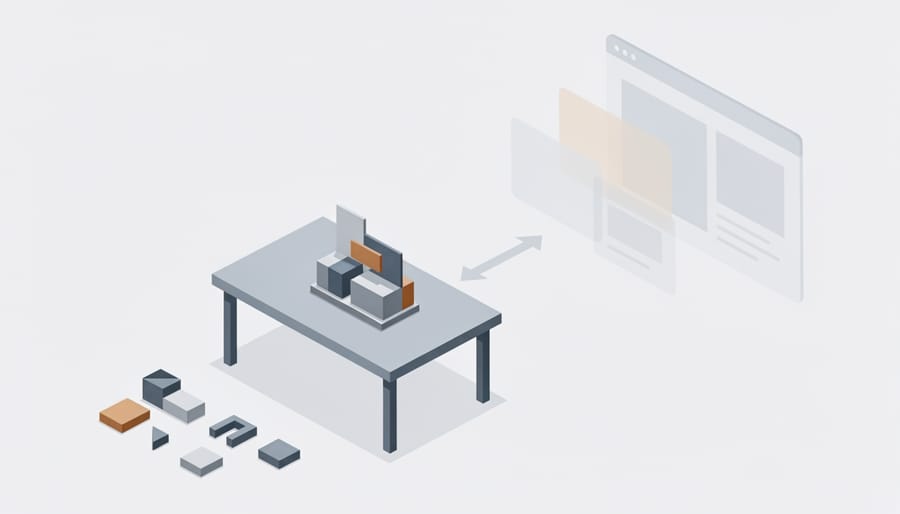
Start with the smallest slice that carries the whole idea. For a chemical safety onboarding course, that might be one branching scenario: a technician finds an unlabeled container and has to decide what to do next. Build it as a rough storyboard or a clickable mockup, not a polished module. If the slice can’t prove the strategy works, the full course won’t either.
Then put it in front of a pilot group of five to eight real learners, plus one or two frontline managers. Ask them to think aloud as they work through it. Watch where they hesitate, reread, or click the wrong answer with confidence. Those moments tell you more than a satisfaction score ever will.
Collect two kinds of evidence. First, performance: did learners handle the scenario correctly, and could they repeat the decision a week later? Second, experience: where did attention drop, which feedback felt helpful, and where did the load feel too heavy? Neurolearning™ principles help here, because confusion usually points to too much information at once, while boredom points to missing emotion or relevance.
Change one or two things per round, rather than everything at once, so you know what moved the result. Add a short retrieval question, trim a screen, rewrite feedback to explain the why. Test again with fresh learners. Once a round shows steady improvement against your baseline metric, you’ve earned the right to scale into full production.
How to Verify It Worked and Where to Go Next
Questions L&D Teams Ask When Putting This Into Practice
Most teams ask the same handful of questions once the theory is clear. Here are the practical answers.
How long does the process take?
A focused pilot, covering learner research, one prototype module, and a test round, can run in four to six weeks. Full production takes longer, but you will have evidence by then about what’s worth building.
How do we start with a small budget?
Skip the full redesign. Interview five to eight learners, sketch a storyboard, and test it with a small group using tools you already own. One well-tested scenario teaches you more than a polished course built on guesses.
Does this work for compliance content?
Yes, and compliance often benefits most. Scenario-based storytelling and retrieval practice turn a dry policy review into decisions people can rehearse, which is what regulators and auditors actually care about.
How do we handle SME resistance?
Bring them into the prototype review rather than presenting finished work. When subject matter experts watch a real learner struggle with a confusing step, the case for redesign makes itself.
Measurement is the question that trips up smaller teams, so it’s worth a closer look. You don’t need a sophisticated analytics stack to prove impact. Pick one business metric before you begin, such as error rates, time to competence, or audit findings. Then compare a pilot group against your baseline, and follow up with a short knowledge check at one and four weeks. A simple spreadsheet and a manager’s feedback conversation will tell you whether the strategy stuck.

Remember that compliance course nobody could recall a week later? The version the team rebuilt looks nothing like it. Short scenarios drawn from real shift-floor decisions replaced the slide-by-slide recitation. Retrieval prompts showed up a few days after the first session, and managers got a simple way to give feedback. Learners remembered more, and more importantly, they made fewer of the mistakes the original course was supposed to prevent.
That change didn’t come from a better checklist of tactics. It came from listening to the people taking the course, naming the real problem, and testing ideas small before committing to them. That’s what Design Thinking in eLearning does for high-impact teaching strategies: it makes them repeatable and measurable, and it keeps them anchored in how people actually attend, feel, and remember. Those are the Neurolearning™ principles doing the quiet work underneath.
So don’t wait for the perfect project. Pick one module that isn’t pulling its weight, build one small prototype, and choose one clear metric to judge it by. Run it with a handful of learners, see what moves, and adjust. Then do it again.