
Your brain rewires itself every time you learn something new, and understanding exactly how that happens transforms the way you design training. The 10 principles of neuroplasticity provide a science-backed framework for creating learning experiences that stick, helping L&D professionals move beyond guesswork and build programs grounded in how the brain actually absorbs, retains, and applies new skills.
Neuroplasticity, the brain’s ability to reorganize neural pathways throughout life, isn’t just a neuroscience concept. It’s your most powerful tool for designing effective corporate training. When you align your eLearning programs with these principles, you tap into mechanisms like spaced repetition, emotional engagement, and contextual relevance that make learning faster and retention stronger.
This guide unpacks each of the 10 core principles with practical applications for corporate learning environments. You’ll see how concepts like use-it-or-lose-it, repetition matters, and transference apply directly to your course design decisions, from microlearning modules to leadership development programs. Each principle includes specific implementation strategies you can use immediately, whether you’re building onboarding content, compliance training, or skills development pathways.
The breakthrough happens when theory meets practice. While research labs study synaptic plasticity, you’re designing programs that need to change behavior and drive business results. These principles bridge that gap, giving you a repeatable method for creating learning experiences that work with the brain’s natural wiring rather than against it.
Why These 10 Principles Matter for Corporate Learning
These ten principles weren’t chosen at random. They emerged from decades of neuroscience research, but more importantly, they survived the practical test of real-world corporate training environments. Every principle on this list meets three essential criteria that bridge the gap between laboratory findings and your learning management system.
First, each principle must translate into actionable eLearning design decisions. Academic research is fascinating, but L&D professionals need concrete answers: what changes should I make to Monday’s course launch? Principles like “use it or lose it” and “repetition matters” directly inform content sequencing, assessment strategies, and reinforcement schedules in ways you can implement immediately.
Second, these principles connect to measurable business outcomes. Training exists to drive performance, reduce errors, accelerate onboarding, or increase revenue. The neuroplasticity concepts included here aren’t just interesting brain science, they correlate with metrics that matter to stakeholders. When you design for specificity or manage cognitive load, you’re not just creating brain-friendly learning; you’re reducing time-to-competency and improving knowledge retention rates that show up in your quarterly reports.
Third, each principle rests on robust, replicable research. You won’t find speculative “brain hacks” here. These are validated findings about how neural adaptation actually works, tested across diverse populations and contexts. This matters because when you invest resources into redesigning your training infrastructure around Neurolearning™ principles, you need confidence the science will hold up.
This intersection of practical application, business relevance, and research validity separates genuinely useful neuroplasticity knowledge from the neuromyths that plague corporate training. The principles ahead represent what actually works when you need learning to stick.
1. Use It or Lose It: Designing for Active Application
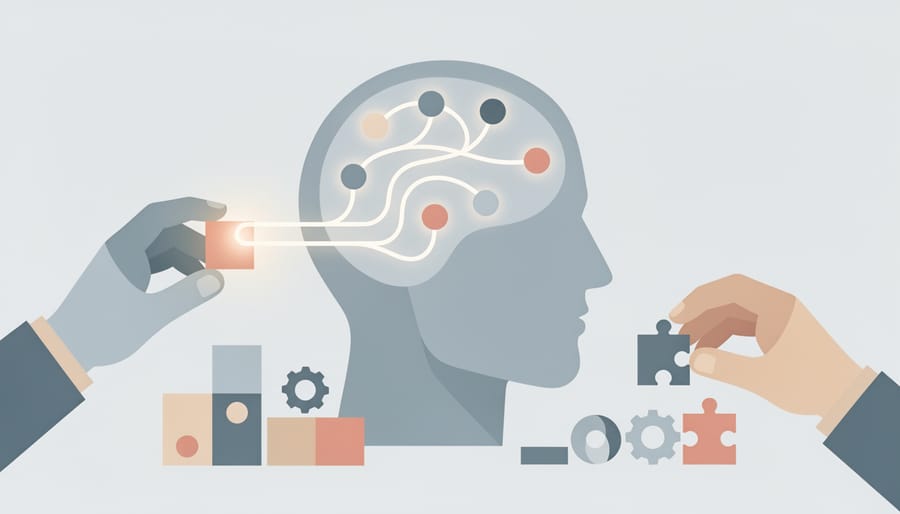
Your brain is ruthlessly efficient. When you learn a new skill but don’t practice it, those freshly formed neural connections begin to degrade within days. This isn’t a design flaw, it’s optimization. The brain allocates energy to pathways that prove useful and prunes away connections that sit idle.
For corporate training, this creates a critical challenge: most employees forget 70% of what they learned within 24 hours if they don’t immediately apply it. Traditional “sit and learn” programs fail precisely because they don’t account for this biological reality.
The solution lies in designing for active application from day one. Instead of front-loading theory followed by eventual practice, effective eLearning interweaves application throughout the learning journey. In employee onboarding, this means having new hires practice actual job tasks in simulated environments before they complete their first week, not watching videos about how those tasks should be done.
Compliance training offers a particularly stark example. A pharmaceutical company shifted from annual compliance refreshers to monthly micro-scenarios where employees practiced identifying ethical violations in realistic situations. Their audit scores improved by 34% because staff actually retained and could apply the decision-making frameworks when real situations arose.
The design principle is straightforward: if the skill matters, create opportunities to use it immediately and repeatedly. Schedule practice sessions within 24 hours of initial learning, then again at increasing intervals. Build job aids that prompt real-world application. Transform passive content consumption into active skill rehearsal, and those neural pathways strengthen rather than fade.
2. Repetition, Repetition, Repetition: Spaced Practice in eLearning
Every time you revisit a skill or concept, you’re not just reviewing, you’re literally rewiring your brain. Neuroscience shows that repeated neural activation strengthens synaptic connections, transforming fragile new learning into durable, automatic knowledge. But here’s the catch: cramming everything into one session doesn’t work. Your brain needs time between exposures to consolidate information and build robust pathways.
This is where spaced repetition becomes essential for eLearning design. Instead of front-loading content in a single marathon module, break learning into smaller chunks distributed over days or weeks. For example, introduce a compliance procedure on Monday, revisit it with a scenario-based question on Thursday, then present a real-world application two weeks later. Each exposure reinforces the neural pathway without overwhelming the learner.
The key is strategic spacing that feels purposeful, not redundant. Use varied formats, microlearning videos, interactive simulations, peer discussions, to revisit core concepts from different angles. This approach works particularly well in just-in-time onboarding where new hires encounter foundational skills multiple times across their first 90 days through different contexts and applications.
Don’t mistake repetition for boring copy-paste content. Change the delivery method, alter the context, or increase complexity slightly with each return. Your learners’ brains crave novelty within familiarity, give them fresh perspectives on familiar material, and you’ll build learning that actually sticks.
3. Specificity Matters: Targeted Learning Design
Your brain doesn’t improve “in general” when you practice a skill, it changes in precise, targeted ways. When a sales rep rehearses objection handling, the neural circuits governing persuasive language and real-time response strengthen. Generic communication training won’t build those specific pathways. This is the principle of specificity: the brain adapts exactly to the demands you place on it, not to vague, adjacent activities.
Generic training fails because it asks learners to make cognitive leaps the brain simply can’t execute efficiently. A broad “leadership fundamentals” course won’t prepare someone to navigate difficult performance conversations. The neural adaptations required for active listening under stress, delivering critical feedback with empathy, and managing defensive reactions are distinct, and they only develop through targeted practice of those exact scenarios.
To design for specificity, start with observable workplace behaviors you need to change. If you want customer service teams to de-escalate angry calls, build modules around recognizing escalation cues, matching tone to customer emotion, and offering specific resolution pathways. Each learning activity should mirror the real decision-making context as closely as possible. Role-playing exercises, branching scenarios that replicate actual customer interactions, and job aids that support on-the-floor performance all strengthen the precise neural networks your teams will use daily.
Evidence shows stories increase salience by connecting abstract concepts to concrete, memorable contexts, making specificity even more powerful when wrapped in realistic narratives. Measurable outcomes follow when training mirrors the job with granular precision.
4. Time-Sensitive Learning: When Training Timing Makes All the Difference

The brain’s capacity for change isn’t constant, it fluctuates based on readiness, context, and proximity to real-world application. This time-sensitivity principle reveals why identical training content can produce dramatically different outcomes depending on when it’s delivered.
Just-in-time learning capitalizes on peak neural receptivity by delivering training immediately before learners need to apply new skills. When a sales rep learns negotiation techniques the day before a client meeting rather than three months earlier in onboarding, the brain treats that information as urgent and relevant. The tighter the gap between learning and application, the stronger the neural encoding and the higher the retention rate.
Onboarding schedules often violate this principle by front-loading compliance training, software tutorials, and policy reviews weeks before employees actually use those systems. The result? Learners forget critical information precisely when they need it most. Redesigning onboarding to align training moments with actual job tasks, teaching expense reporting the week employees first submit receipts, not during orientation, dramatically improves both retention and confidence.
This time-sensitivity extends to refresher training and skill updates. Neural pathways respond best to reinforcement when they’re actively being used, which is why performance support tools and microlearning modules embedded in workflow outperform annual training sessions. The principle also intersects with inclusive cross-cultural design where timing considerations must account for different cultural approaches to learning readiness and workplace integration.
5. Salience Drives Attention: Making Learning Matter
The brain doesn’t treat all information equally. Neural networks dedicate resources to what feels important, threatening, novel, or emotionally resonant while filtering out the mundane. This is salience, the quality that makes something stand out and demand attention. For corporate learning designers, understanding salience means the difference between training that sticks and content that learners forget before they close the browser.
Consider two compliance training modules covering the same safety protocol. The first presents bullet points explaining proper procedures. The second opens with a brief story: “Last April, a warehouse team member skipped one step in the lockout procedure. Three people went home that night wondering if their colleague would recover.” The emotional weight of that narrative triggers a neural response that dry procedures never will. The amygdala flags the information as significant, strengthening encoding and retrieval pathways.
Making learning salient doesn’t require dramatic storytelling in every slide. Connect content directly to learners’ current challenges. Frame a customer service technique around the frustrated client they dealt with yesterday, not a generic scenario. Use real data from their department, real names from their organization, familiar contexts that signal “this matters to you, right now.”
Visual salience works similarly. The brain notices contrast, movement, and unexpected elements. A single red data point on a monochrome chart captures attention far more effectively than uniformly colorful slides competing for focus. Strategic use of white space, intentional color choices, and purposeful media create neural priority without overwhelming cognitive resources.
When learners believe information will help them succeed, reduce frustration, or protect something they value, their brains automatically allocate attention and consolidation resources. Design with that reality, not against it.
6. Age and Experience: Adapting Training for Your Workforce
Neuroplasticity doesn’t disappear with age, it shifts. While younger brains form new connections more rapidly, experienced learners bring schema and context that accelerate application. The key is designing training that leverages these differences rather than ignoring them.
For early-career employees, build structured learning pathways with clear progression. Their brains are primed for rapid skill acquisition, but they need explicit frameworks to organize new information. Use microlearning modules that connect individual concepts to broader competencies, allowing them to build mental models systematically.
Mid-career professionals benefit from problem-based scenarios that activate existing knowledge networks. Don’t start from scratch, anchor new content to their accumulated expertise. A sales manager learning CRM software doesn’t need basic customer relationship theory; they need to see how the tool amplifies strategies they already use.
Senior team members often learn best when training respects their experience while introducing new approaches as enhancements, not replacements. Frame digital transformation as augmentation rather than disruption. When teaching remote learning techniques to veteran managers, connect virtual facilitation skills to their in-person meeting expertise rather than treating remote work as an entirely foreign discipline.
Design for cognitive flexibility across all age groups by offering multiple pathways to the same learning outcome, video demonstrations, written guides, peer discussion forums. This isn’t about dumbing down content; it’s recognizing that neuroplastic change happens through different mechanisms depending on what learners bring to the experience.
7. Transference: Building Skills That Actually Transfer to the Job

Transference describes the brain’s ability to apply learned patterns across contexts, but this neural process is far more fragile than most L&D professionals realize. When training content stays isolated in a learning module and never connects to actual work situations, new neural pathways remain weakly linked to the job environment. The result? Employees complete courses but struggle to apply skills when it matters.
The brain encodes learning alongside contextual cues from the environment where it occurs. If your compliance training looks nothing like the warehouse floor, or your customer service simulation bears no resemblance to your CRM interface, you’re building neural pathways that don’t activate when employees need them most.
Design for transference by embedding authentic workplace cues directly into training. Use actual screenshots from your company’s systems. Feature real scenarios employees encounter weekly, not generic hypotheticals. If safety procedures require specific equipment, show that exact equipment in your training videos, the brain links procedural knowledge to visual markers.
Vary your practice contexts deliberately. An employee who practices conflict resolution in three different simulated settings builds more flexible neural networks than one who repeats the same scenario five times. This variation teaches the brain which elements of the skill transfer universally versus which adapt to context.
Build transfer bridges explicitly. After each module, require learners to identify two specific moments this week when they’ll apply the skill. This metacognitive step creates intentional neural links between training content and daily workflow, strengthening the pathways that ensure genuine workplace application.
8. Interference: Avoiding Cognitive Overload in Course Design
Your brain is remarkably efficient at filtering what it stores, but that same efficiency creates a problem: when new information resembles existing knowledge, the two can blur together or even cancel each other out. This phenomenon, called interference, happens when similar concepts compete for the same neural pathways. In workplace training, interference shows up when employees confuse new procedures with old ones, mix up software features after an update, or can’t remember which compliance rule applies to which situation.
The good news? You can design around interference by thoughtfully sequencing content and managing cognitive load. Start by spacing out similar topics rather than teaching them back-to-back. If you’re rolling out new software that replaces an old system, explicitly acknowledge what’s changing and what’s staying the same, don’t assume learners will automatically sort it out. Use contrast and comparison deliberately, not accidentally.
Watch for these common interference patterns and their fixes:
- Teaching two similar processes consecutively, separate them with unrelated content or a break
- Introducing multiple acronyms or technical terms at once, limit new vocabulary to 3-5 items per module
- Updating procedures without addressing old habits, begin with “what’s different now” before diving into details
- Overloading a single session with dense information, chunk content into smaller, focused learning episodes
- Using inconsistent terminology across modules, standardize language and reinforce key terms
Cognitive load management ties directly to interference prevention. When learners feel overwhelmed, their brains can’t effectively encode new information, making interference more likely. Apply psychological safety strategies that reduce anxiety and create space for questions. Leverage engagement and emotion to make new content distinctive and memorable, separating it clearly from what came before.
9. Challenge and Difficulty: The Goldilocks Zone of Learning
The brain rewires itself most efficiently when learning sits at the edge of current capability, challenging enough to require effort, but not so difficult that learners shut down. Neuroscientist Lev Vygotsky called this sweet spot the “zone of proximal development,” and it’s where neuroplastic change accelerates.
Too-easy training wastes time and engagement. When learners already know the material, neural pathways don’t need to adapt, and attention drifts. Conversely, overwhelming difficulty triggers stress responses that actually inhibit plasticity. The amygdala activates, working memory narrows, and the brain prioritizes survival over learning.
The goldilocks zone lies precisely between these extremes. Here’s how to calibrate difficulty in your eLearning modules:
Start with diagnostic assessments that reveal each learner’s baseline. Adaptive learning platforms can then adjust content complexity in real time, but even static courses benefit from tiered pathways, novice, intermediate, advanced, that let learners self-select appropriate challenge levels.
Build progressive complexity into module sequences. Early exercises should feel achievable with moderate concentration. As learners demonstrate competence, gradually remove scaffolding and introduce multi-step scenarios that require applying concepts in new combinations.
Watch for struggle signals. If completion rates plummet or time-on-task spikes dramatically at specific points, you’ve likely crossed into the frustration zone. Conversely, if everyone breezes through with perfect scores on first attempts, you’re not creating enough neural demand to drive growth.
The goal isn’t comfort, it’s productive struggle that builds new capability without breaking confidence.
10. Emotional State: Designing for Psychological Safety and Engagement

Your learners’ emotional state while training isn’t a soft factor, it’s a biological gatekeeper to neuroplasticity. Cortisol, the stress hormone, actively suppresses the formation of new neural connections. When employees approach training while anxious about performance evaluations or fearful of exposing knowledge gaps, their brains literally resist change.
Conversely, moderate positive arousal, curiosity, excitement, a sense of progress, triggers dopamine release that strengthens synaptic connections. This explains why gamified elements work when done well: they create anticipation without stakes that feel threatening.
Build psychological safety into your eLearning architecture by normalizing mistakes as data, not failures. Frame assessments as progress checks rather than tests. One financial services firm redesigned their compliance training by removing pass-fail language entirely, replacing it with “initial attempt” and “mastery achieved.” Completion rates jumped 34% and knowledge retention improved measurably.
Reduce performance anxiety by making the learning path visible. Progress bars, skill trees, and milestone markers all communicate “you’re moving forward,” which sustains motivation during difficult material. Offer multiple attempts on quizzes without penalty, this signals that the goal is learning, not sorting.
Address motivation directly by connecting content to personal relevance early. When learners understand why a skill matters to their specific role, emotional engagement rises and defensive resistance drops. A two-minute personal relevance reflection before modules can shift learners from compliance mode to genuine curiosity, creating the neurochemical conditions where plasticity thrives.
Putting Neuroplasticity Principles into Practice
You now have the ten principles, but knowledge alone changes nothing. The real question is: what will you do differently on Monday morning?
Start with one principle, one project. Pick an upcoming module or training initiative and choose the single neuroplasticity principle that addresses your biggest design challenge. If learners forget content within weeks, focus on spaced repetition. If skills don’t transfer to the job, zero in on transference strategies. Applying one principle well beats half-implementing all ten.
Use design thinking to prototype quickly. Map your current learner journey, identify friction points where brain science could help, then build a small intervention. A Neurolearning™ approach means testing assumptions with real users, not rolling out theory campus-wide. Run a pilot with twenty learners, gather feedback within two weeks, and refine based on what actually happens in their brains and behaviors.
Here’s your immediate action checklist:
- Audit one existing course against the specificity and salience principles, where does content feel generic or irrelevant?
- Add spaced practice touchpoints to your next module: three brief reviews over four weeks beats one marathon session
- Interview five recent training graduates about what transferred to their daily work and what didn’t
- Measure one behavioral outcome tied to your training (application rate, error reduction, time-to-competency) as your neuroplasticity baseline
- Block ninety minutes next week to redesign your weakest learning activity using the challenge principle
- Share these principles with your design team and commit to one collective experiment this quarter
The beauty of neuroplasticity is that your own brain will adapt as you practice these methods. Your first attempt at spaced repetition design might feel clunky. By your fifth module, it becomes intuitive. Track what works in a simple spreadsheet: which principles moved which metrics for which audiences. This data becomes your evidence base, proving ROI to stakeholders while sharpening your instincts as a learning architect.
Sustainable change in organizational learning mirrors sustainable change in individual brains, it happens through repeated, targeted, emotionally salient practice over time. Start small, measure everything, and let your learners’ outcomes guide your next iteration.
Understanding neuroplasticity isn’t just an academic exercise, it’s a competitive advantage. When you design eLearning that aligns with how brains actually change and grow, you’re not just ticking compliance boxes or checking off training requirements. You’re building genuine capability within your workforce, one neural pathway at a time.
The ten principles we’ve explored translate directly into business outcomes: better retention, faster skill acquisition, stronger transfer to on-the-job performance. Employees who learn through brain-friendly design don’t just complete courses, they develop competencies that stick, adapt, and compound over time.
Sustainable organizational growth doesn’t happen through one-off training events. It emerges when learning becomes embedded in how your people work, think, and solve problems. Neuroplasticity research gives us the blueprint for making that happen.
Start with one principle. Test it in your next module. Measure the difference. Then build from there. The brain’s remarkable capacity for change is your raw material, your role is creating the conditions where that change serves both learners and business goals. That’s the promise of truly evidence-based learning design.
Frequently Asked Questions
How quickly will we see results from applying neuroplasticity principles to our training?
Initial behavioral changes often appear within days or weeks, but sustainable skill development requires consistent practice over months. The timeline varies based on complexity, simple procedural skills strengthen faster than complex decision-making abilities that require deeper neural restructuring.
Do these principles work equally well for all types of corporate training?
Yes, though the application methods differ. Technical skills training benefits most from repetition and specificity, while leadership development relies heavily on emotional state and transference principles. The key is matching the right neuroplasticity principles to your specific learning outcomes.
How do we measure neuroplastic change in a business context?
Track behavioral metrics rather than trying to measure brain changes directly. Look at performance improvements, skill retention rates over time, error reduction in job tasks, and the speed at which learners apply new knowledge in real situations.
What’s the connection between neuroplasticity and training ROI?
Neuroplasticity-based design creates lasting behavioral change, which directly impacts productivity, error rates, and employee capability. When training actually sticks, you reduce re-training costs and see sustained performance improvements rather than the typical post-training decline.
These questions reflect the practical concerns L&D teams face when moving from traditional training approaches to brain-based design. The science validates what many practitioners already suspect: one-and-done training events rarely create lasting change. When you design with neuroplasticity in mind, you’re investing in sustainable skill development that compounds over time.
The measurement challenge deserves particular attention. You won’t need brain scans to prove your training works. Standard performance metrics become far more meaningful when you understand the neural mechanisms behind them. A six-month retention rate tells you whether neural pathways strengthened or faded. Transfer rates reveal whether training created flexible, adaptable knowledge or rigid, context-dependent responses.