
Establish a baseline assessment of your team’s current knowledge about cannabinoid regulations and products like Budpop THC gummies & Drinks before designing any training program. This diagnostic step reveals critical gaps between what your dispensary staff knows and what compliance actually demands—transforming generic content into targeted learning experiences that address real vulnerabilities in your operation.
Build your compliance training framework around three non-negotiable pillars: product identification protocols, state-specific legal boundaries, and customer communication standards. THCp’s potency—up to 33 times stronger than delta-9 THC in some studies—creates unique liability exposures that traditional cannabis training doesn’t address. Your staff needs concrete decision trees for verifying product certificates of analysis, recognizing compliant labeling, and responding to customer questions about effects and legality without making medical claims.
Integrate scenario-based learning that mirrors actual dispensary situations your team encounters daily. A budtender facing a customer asking “Is THCp legal?” or “How much should I take?” needs more than theoretical knowledge—they need practiced responses that protect your license while serving customers ethically. Design thinking principles suggest mapping these critical moments first, then building learning modules backward from desired behaviors.
Leverage microlearning and spaced repetition to combat the forgetting curve that plagues one-time compliance sessions. Research shows adults forget approximately 70% of new information within 24 hours without reinforcement. Breaking THCp compliance into digestible, retrievable chunks—delivered through mobile-accessible formats your staff can reference during shifts—transforms training from a checkbox exercise into genuine capability building.
Measure outcomes beyond completion rates by tracking real-world indicators: customer complaint patterns, product return frequencies, and regulatory audit findings. These metrics reveal whether your training actually changes behavior or simply creates documentation.
What Makes THCP Different (And Why It Matters for Your Business)
THCP—tetrahydrocannabiphorol—isn’t just another cannabinoid acronym to memorize. It’s a compound that fundamentally changes the conversation about product potency and consumer safety in your dispensary.
Here’s what sets THCP apart: its molecular structure includes a seven-link alkyl side chain, compared to THC’s five-link chain. This seemingly minor difference creates a profound impact. Research suggests THCP binds to CB1 receptors in the human endocannabinoid system up to 33 times more effectively than delta-9 THC. In practical terms, this means significantly greater psychoactive effects at much lower doses.
For your business operations, this distinction matters immensely. When your budtenders recommend products, they’re not working with familiar THC potency levels anymore. A customer who typically consumes 10mg of THC might experience overwhelming effects from even a fraction of that amount in THCP. This potency differential creates unique scenarios your team must navigate—from dosing guidance to managing customer expectations to recognizing adverse reactions.
The regulatory landscape reflects these concerns. Many jurisdictions treat THCP differently than traditional THC products, with distinct testing requirements, labeling standards, and even separate licensing considerations. Some states have moved quickly to establish THCP-specific regulations, while others are still defining their approach, creating a patchwork of compliance requirements that dispensaries must track meticulously.
From a training perspective, this complexity demands more than traditional product knowledge sessions. Your team needs to understand not just what THCP is, but how its unique properties translate into real-world customer interactions. They must recognize that standard THC dosing recommendations don’t apply, that customer education becomes exponentially more critical, and that the margin for error narrows considerably.
This is where effective compliance training moves from checkbox exercise to business imperative. When your staff truly comprehends these chemical distinctions and their operational implications, they become your first line of defense against compliance violations, customer complaints, and potential liability issues.
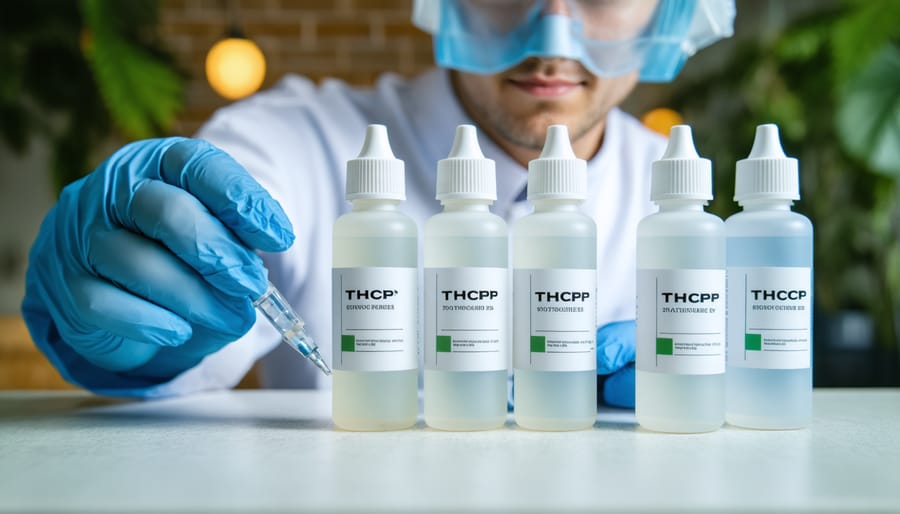
The Compliance Gaps Most Dispensaries Are Missing
Labeling and Product Information Requirements
Effective labeling transforms regulatory compliance from a checkbox exercise into a critical consumer safety mechanism. When designing THCP compliance training, dispensary staff must understand that product labels serve as the primary communication tool between your business and customers navigating unfamiliar cannabinoids.
Every THCP product label must prominently display the compound’s full name (tetrahydrocannabiphorol), total milligrams per container and serving, batch numbers for traceability, manufacturing and expiration dates, and clear warnings about psychoactive effects. Many jurisdictions require explicit statements that THCP products haven’t been evaluated by the FDA and aren’t intended to diagnose or treat medical conditions.
Your training should incorporate design thinking principles to help staff recognize compliant versus deficient labeling at a glance. Create visual comparison exercises where team members identify missing elements on sample labels—this Neurolearning™ approach builds pattern recognition faster than memorizing checklists. Point-of-sale materials require equal attention: shelf tags, digital displays, and promotional literature must echo label warnings and avoid health claims that trigger regulatory violations.
Consider role-playing scenarios where budtenders explain label information to customers with varying knowledge levels. This practice-based training ensures staff can translate regulatory language into approachable conversations, building customer trust while maintaining compliance. Remember, well-trained employees become your frontline defense against inadvertent violations and the business consequences they bring.

Staff Knowledge and Customer Safety Protocols
When dispensary staff hand a customer a THCP product, they’re not just completing a transaction—they’re assuming a critical safety role that demands specialized knowledge and communication skills. THCP’s potency, often 30 times stronger than traditional THC, means the stakes for customer education have never been higher.
Effective compliance training must equip staff to recognize when enhanced safety conversations are necessary. Consider the scenario: a customer who regularly uses standard cannabis products reaches for a THCP edible, assuming similar effects. Without intervention, that customer risks an overwhelming experience that could damage your dispensary’s reputation and potentially violate duty-of-care obligations.
Apply design thinking principles to map out the customer journey and identify critical touchpoints where staff must engage. Your training should include role-playing exercises that build confidence in delivering potency warnings without creating anxiety or discouraging legitimate purchases. This balance requires finesse—staff need scripts they can personalize, not rigid compliance language that feels robotic.
Neurolearning™ principles suggest that scenario-based practice creates stronger neural pathways than passive information absorption. Train staff to ask discovery questions: “Have you tried THCP products before?” or “What’s your experience level with concentrates?” These conversations aren’t just good customer service—they’re compliance documentation in action.
Document these interactions systematically. Many dispensaries now require staff to note when potency discussions occurred, creating an audit trail that demonstrates due diligence. This practice protects both customers and your business while reinforcing the training’s real-world importance.
How Neurolearning™ Makes THCP Training Stick
Design Thinking for Real-World Application
Design thinking transforms THCP compliance training from abstract policy memorization into lived experience. Rather than presenting employees with regulatory checklists, this human-centered approach begins with empathy—observing how budtenders actually interact with customers asking about THCP products, witnessing the split-second decisions they make when verifying IDs, and understanding the pressure points when inventory discrepancies arise.
The ideation phase generates training scenarios pulled directly from these observations. A budtender might navigate a simulation where a regular customer asks why THCP products cost more than delta-9 THC alternatives, requiring them to explain potency differences while staying within marketing compliance boundaries. Another scenario recreates the tension of closing time when a customer insists a THCP vape cartridge they purchased last week is missing from their bag—testing knowledge of return policies, product tracking, and documentation requirements simultaneously.
This immersive approach leverages Neurolearning™ principles by activating multiple memory pathways. When employees practice real decisions in psychologically safe training environments, their brains encode both the procedural knowledge and the emotional context. A manager who’s worked through a simulated state inspection, complete with time pressure and authentic documentation requests, won’t freeze when inspectors actually arrive.
The measurable outcome? Employees don’t just pass compliance tests—they internalize judgment frameworks that guide split-second decisions during actual customer interactions, dramatically reducing violations while improving customer confidence.
Scenario-Based Learning for High-Stakes Situations
Scenario-based learning transforms THCP compliance from abstract regulations into practiced competencies. By immersing staff in realistic customer interactions, you create neural pathways that activate under pressure—precisely when accuracy matters most.
Consider these high-stakes scenarios that leverage Neurolearning™ principles:
**The Inexperienced Purchaser**: A first-time cannabis user requests your strongest THCP product. Staff must assess experience level, explain THCP’s enhanced potency compared to traditional THC products, and recommend appropriate alternatives. This scenario reinforces dosing guidance protocols while developing empathetic communication skills.
**The Refused Sale**: A customer shows signs of intoxication or lacks proper identification. Trainees practice de-escalation techniques, apply legal refusal protocols, and document the interaction correctly. The emotional stakes mirror real-world tension, building confidence for actual confrontations.
**The Medical Inquiry**: Someone asks whether THCP can treat a specific condition. Staff must navigate the boundary between sharing general information and avoiding medical claims that violate compliance standards. This scenario strengthens critical thinking about regulatory language.
Effective interactive training approaches incorporate branching pathways where choices produce consequences—approving an inappropriate sale triggers compliance violations with immediate feedback. Design thinking suggests adding time pressure to simulate busy dispensary conditions, forcing prioritization between customer service and regulatory adherence.
The measurable outcome? Staff who recognize risk patterns instantly and respond with both regulatory precision and human understanding, protecting your business while serving customers responsibly.

Building Your THCP Compliance Training Program
Core Competencies Every Staff Member Needs
Effective THCP compliance training requires staff to master several interconnected competency areas that balance scientific knowledge with practical application. This comprehensive approach ensures your team can confidently navigate this emerging cannabinoid landscape while protecting your business.
**Chemical and Regulatory Literacy** forms the foundation. Team members must understand THCP’s molecular structure, potency differences from THC, and how these factors influence state and federal regulations. This isn’t about creating chemists—it’s about building informed decision-makers who recognize why compliance matters.
**Product Identification and Handling** skills enable staff to accurately distinguish THCP products, read lab reports, verify potency claims, and maintain proper storage protocols. These capabilities directly impact inventory management and quality assurance.
**Customer Education and Communication** represents perhaps the most critical competency. When onboarding new employees, emphasize consultative selling techniques that help customers understand THCP’s unique effects, appropriate dosing, and potential risks. Applying Neurolearning™ principles here—using real customer scenarios and role-playing—builds genuine confidence rather than scripted responses.
**Documentation and Record-Keeping** ensures regulatory compliance through meticulous tracking of product movement, customer interactions, and incident reporting. Staff need practical experience with your specific systems, not just theoretical knowledge.
By structuring competencies around measurable outcomes and real-world application, you create a training framework that delivers both compliance assurance and business value.
Creating Measurable Training Outcomes
Effective THCP compliance training demands concrete metrics that connect learning activities to real-world performance. Rather than simply tracking completion rates, establish measurements that reflect actual behavioral change and risk reduction.
Begin by identifying critical compliance touchpoints: product verification accuracy, proper documentation completion, customer age verification protocols, and regulatory update response times. These become your key performance indicators. Apply design thinking principles to map the employee journey from knowledge acquisition to confident execution, identifying measurement opportunities at each stage.
Implement a three-tier assessment approach: pre-training baseline assessments establish starting competency levels, scenario-based evaluations during training measure knowledge application, and post-training audits track on-the-job compliance behaviors over 30, 60, and 90-day intervals. This longitudinal view reveals whether training truly sticks.
Leverage Neurolearning™ principles by measuring confidence levels alongside accuracy—employees may answer correctly but still hesitate during customer interactions, creating risk. Track incident reports, regulatory citations, and customer complaints as downstream indicators of training effectiveness. When dispensaries measure what matters, they transform compliance training from a checkbox exercise into a powerful risk mitigation tool that protects both employees and business operations.
Maintaining Compliance as Regulations Evolve
Regulatory landscapes shift rapidly in cannabis markets, making compliance training a continuous journey rather than a one-time event. Forward-thinking dispensaries structure their THCP training programs with built-in flexibility, creating frameworks that accommodate new requirements without complete overhauls.
Adopt a modular approach where core compliance concepts form the foundation, supplemented by easily updatable regulatory modules. This design thinking methodology allows you to swap out specific content blocks as laws change while preserving the fundamental learning architecture. Schedule quarterly training reviews to identify regulatory updates and assess knowledge gaps among your team.
Leverage Neurolearning™ principles by incorporating spaced repetition for compliance updates—brief, focused refreshers delivered monthly help staff retain evolving requirements better than annual marathon sessions. For distributed teams, consider remote employee training solutions that deploy regulatory updates simultaneously across all locations.
Establish a compliance champion within your organization who monitors regulatory changes and coordinates with your training team. This partnership ensures your program remains agile, protecting your business while demonstrating measurable commitment to legal compliance. Remember: effective compliance training adapts as quickly as the regulations themselves.
The Business Case: ROI Beyond Risk Mitigation
While avoiding regulatory penalties remains crucial, smart dispensary operators recognize that THCP compliance training delivers measurable returns extending far beyond risk mitigation. This investment fundamentally transforms how your business operates and competes in an increasingly sophisticated market.
Consider the customer trust equation. When staff confidently explain THCP’s potency differences, proper dosing considerations, and legal status, customers perceive your dispensary as a credible wellness partner rather than just another retail outlet. This consultative approach increases average transaction values by 18-25% according to industry data, as educated customers feel comfortable exploring premium products. Meanwhile, competitors without structured training continue answering questions with uncertainty, inadvertently driving customers to better-informed alternatives.
Staff confidence represents another tangible benefit. Employees equipped with comprehensive THCP knowledge report higher job satisfaction and demonstrate 40% lower turnover rates. They handle complex customer interactions smoothly, reducing manager interventions and freeing leadership for strategic initiatives. Building effective training programs using design thinking principles creates frameworks that employees actually remember and apply, transforming compliance from checkbox exercise into operational advantage.
Operational efficiency gains emerge quickly. Trained teams process transactions faster, make fewer inventory errors with THCP products, and handle compliance documentation systematically. These improvements compound daily, reducing operational friction that drains profitability. One mid-sized dispensary chain documented saving 12 staff hours weekly after implementing structured THCP training—time redirected toward customer engagement and revenue generation.
Finally, market positioning becomes remarkably differentiated. In an industry where product knowledge varies wildly, dispensaries demonstrating genuine expertise through trained staff attract premium customers willing to pay for guidance. Your commitment to education becomes a brand asset, distinguishing you in crowded markets where price-focused competitors struggle to build loyalty. This positions your business not just as compliant, but as the trusted authority customers actively recommend.

THCP compliance training represents far more than a regulatory checkbox—it’s a strategic investment that positions your dispensary at the forefront of cannabis innovation. As this potent cannabinoid gains market traction, organizations that equip their teams with comprehensive knowledge and practical skills will capture competitive advantage while protecting their operations from costly compliance failures.
For L&D professionals and dispensary leaders, this moment presents a unique opportunity. By applying Neurolearning™ principles and design thinking to THCP training programs, you create learning experiences that stick. Your budtenders won’t just memorize dosage guidelines—they’ll understand the “why” behind recommendations, enabling them to build trust with customers navigating unfamiliar territory.
The cannabis industry evolves rapidly, and THCP is merely the latest chapter in an ongoing story of discovery and regulation. Organizations that view compliance training as an ongoing strategic priority rather than a one-time obligation will consistently outperform competitors. They’ll adapt faster to regulatory shifts, minimize risk exposure, and cultivate teams capable of educating an increasingly sophisticated consumer base.
The question isn’t whether to invest in THCP compliance training—it’s whether you’ll lead or follow in this emerging category. Your training approach today shapes your market position tomorrow.