
In the late 8th century, Charlemagne transformed education across his empire by establishing a standardized curriculum, recruiting scholars from across Europe, and building palace schools that became the blueprint for medieval learning. His reforms did more than preserve classical knowledge during the Dark Ages. They created a replicable system for scaling educational quality across diverse regions, standardizing instruction, and building infrastructure that outlasted his reign by centuries.
For learning and development professionals in 2026, Charlemagne’s approach offers unexpected parallels. He didn’t simply decree that education should improve. He built the architecture to make it happen: teacher training programs through his Admonitio Generalis of 789, manuscript copying centers to ensure consistent materials, and a core curriculum that balanced literacy with practical skills. The palace school at Aachen became his pilot program, where he personally participated in lessons alongside nobles and clergy, testing methods before wider implementation.
The Carolingian Renaissance succeeded because it addressed the same challenges corporate L&D teams face today: fragmented training quality across locations, inconsistent content delivery, lack of qualified instructors, and the need to demonstrate measurable impact to stakeholders. Charlemagne’s solution combined centralized standards with localized execution, investments in instructor capability, and infrastructure that made learning accessible at scale.
This isn’t about romanticizing medieval pedagogy or applying outdated methods. It’s about extracting design principles from one of history’s most successful educational transformation efforts. His reforms provide a framework for modern L&D leaders wrestling with digital transformation, hybrid learning environments, and the pressure to prove ROI. The same tensions between standardization and customization, between theoretical knowledge and practical application, between resource constraints and ambitious goals, existed 1,200 years ago. Charlemagne’s responses, stripped of their historical context, reveal strategies worth examining today.
Charlemagne’s Educational Reforms: The Historical Foundation
The Problem Charlemagne Solved
When Charlemagne ascended to power in 768 CE, his empire faced a crisis that threatened its very governance: the people who ran it couldn’t read. Clergy struggled to interpret sacred texts accurately, leading to corrupted liturgy and inconsistent religious practice across territories. Nobles lacked the literacy to manage administrative correspondence or legal documents. Even basic record-keeping varied wildly from region to region, making centralized rule nearly impossible.
The fragmentation ran deeper than simple illiteracy. Each monastery, cathedral, and noble house developed its own approach to whatever education existed. One region might preserve certain texts while another had never heard of them. Teaching methods, if they existed at all, remained local and informal. There was no shared vocabulary for discussing ideas, no common standards for what educated people should know. Knowledge transfer depended entirely on whoever happened to be available locally, creating enormous gaps in capability across the empire.
For modern L&D leaders, the parallels are striking. How many organizations today struggle with fragmented learning systems where different departments use different platforms, varying quality standards, and inconsistent content? The sales team learns one methodology while operations uses another. New hires in Tokyo receive different training than those in Toronto. Subject matter expertise sits trapped in individual silos rather than systematically shared. Like Charlemagne’s empire, these organizations possess knowledge, but lack the infrastructure to distribute it effectively or ensure consistent competency across their entire operation.
His Implementation Strategy
Charlemagne didn’t merely announce his educational vision and hope local officials would comply. He engineered a systematic rollout that combined top-down mandates with practical support, creating conditions where compliance became the path of least resistance.
His primary mechanism was the capitulary, a written legislative decree dispatched throughout the empire. The Admonitio Generalis of 789 stands as his most comprehensive educational mandate, explicitly ordering bishops and abbots to establish schools in every monastery and cathedral. These weren’t suggestions; they carried the full weight of imperial authority, with non-compliance risking removal from office. Charlemagne understood that organizational transformation requires clear directives, not vague encouragement.
But mandates alone fail without resources. Charlemagne allocated substantial funding to build schoolhouses, purchase writing materials, and compensate master teachers. He personally recruited Alcuin of York and other scholars, offering them secure positions and generous patronage. This wasn’t passive hope that talented educators would somehow appear; it was active talent acquisition backed by competitive compensation, the eighth-century equivalent of hiring learning architects and investing in authoring tools.
Quality control came through standardized curricula and inspection systems. The missi dominici, imperial envoys dispatched in pairs, audited educational establishments during their rounds, verifying that schools met prescribed standards for Latin instruction and scriptural knowledge. Charlemagne established clear benchmarks: clergy needed functional literacy, nobles required administrative competency, and all students mastered the trivium as foundation.
His accountability measures extended to measurable outcomes. Schools reported enrollment numbers, graduation rates, and student proficiency. Charlemagne personally tested students during court visits, asking questions to verify their learning. When performance lagged, he reassigned resources or replaced administrators. This results-focused approach transformed education from aspirational to operational, proving that systematic implementation, not just vision, drives lasting change.
Five Principles from Charlemagne’s Approach That Transform Corporate Learning

Standardization Without Stifling Innovation
Charlemagne mandated that all cathedral and monastic schools teach a uniform trivium, grammar, rhetoric, and logic, yet he explicitly allowed regional monasteries to determine their teaching methods and select supplementary texts. This dual approach created empire-wide consistency in learning outcomes while respecting local expertise and cultural context. The result was standardization that actually accelerated innovation because educators shared a common language and framework for improvement.
Modern L&D leaders face the same challenge when scaling learning programs across distributed teams or global offices. The solution mirrors Charlemagne’s: define non-negotiable competencies and assessment standards, but grant instructional designers and regional trainers autonomy in delivery methods. This balance becomes particularly powerful when you incorporate neuroplasticity principles into your core framework, standardizing brain-based learning science while allowing creative application.
Consider establishing a “curriculum constitution” that specifies what learners must achieve and what evidence proves mastery, then inviting your training teams to experiment with how they reach those outcomes. Charlemagne understood that rigid prescription kills ownership; his genius was knowing exactly where to standardize and where to liberate.
Infrastructure Investment as Strategic Priority

Charlemagne didn’t just decree that learning mattered, he built the physical and institutional foundation to make it happen. His investment in scriptoria, monastic schools, and the palace academy at Aachen represented a substantial reallocation of imperial resources toward knowledge infrastructure. These weren’t symbolic gestures; they were capital expenditures with long-term strategic intent. Scriptoria required parchment, scribes, ink, proper lighting, and maintenance. Schools needed buildings, teachers, textbooks, and stipends. Charlemagne understood that sustainable learning required tangible infrastructure, not merely enthusiasm.
Modern L&D leaders face the same choice: invest in robust learning platforms or accept fragmented, ineffective training. Your LMS, content authoring tools, analytics dashboards, and collaboration environments are your empire’s scriptoria. When organizations underfund learning technology, choosing the cheapest LMS or relying on outdated tools, they replicate the pre-Carolingian chaos Charlemagne inherited. Conversely, treating learning infrastructure as strategic priority signals that knowledge transfer is core business, not overhead. Charlemagne’s scriptoria preserved civilization’s knowledge; your technology stack determines whether your organization’s expertise scales or evaporates with employee turnover. The investment reveals whether you view learning as cost center or competitive advantage.
Expert-Led Knowledge Transfer
Charlemagne understood that knowledge transfer requires more than curriculum, it demands exceptional talent. He recruited Alcuin of York, the period’s foremost scholar, to lead his palace school, then assembled specialists from across Europe. This wasn’t ceremonial; Alcuin redesigned the empire’s entire pedagogical approach, standardized Latin instruction, and personally trained the next generation of educators.
Modern L&D leaders face an identical imperative. Subject matter experts bring credibility and depth that generic content cannot replicate. When your sales training features your top-performing account executive explaining real deal scenarios, learners absorb both technique and tacit knowledge, the unwritten judgment calls that separate competent from exceptional performance.
The parallel extends beyond delivery. Charlemagne’s scholars created new teaching methods because they understood their disciplines intimately. Your SMEs should similarly shape how content is structured, not merely review slides created by others. Involve them in design thinking workshops where they map competency progressions, identify common misconceptions, and suggest practice scenarios drawn from actual work challenges. This transforms expertise into scalable learning architecture while maintaining the authenticity that drives engagement and retention.
Literacy as Organizational Competency
Charlemagne didn’t just promote reading and writing, he defined literacy as a baseline competency for anyone holding responsibility in his empire. Clergy couldn’t interpret scripture without Latin fluency. Administrators couldn’t execute policy without written communication skills. His reforms established a clear threshold: certain roles simply required specific knowledge, and meeting that standard wasn’t optional.
Modern organizations face an identical challenge in defining their non-negotiable competencies. What’s the 2026 equivalent of Charlemagne’s Latin requirement? For many businesses, it’s data literacy, the ability to interpret metrics and make evidence-based decisions. For others, it’s digital fluency across core platforms. Some require change agility or cross-functional collaboration skills.
The lesson isn’t that everyone needs the same capabilities. Charlemagne’s literacy standards varied by role, monks needed deeper theological knowledge than regional governors. The breakthrough was making competency expectations explicit and universal within each function, then building learning systems to deliver them at scale. When L&D leaders ask “What can’t our people afford not to know?” they’re asking Charlemagne’s question thirteen centuries later.
Measurable Accountability
Charlemagne didn’t just establish schools, he built systematic accountability into his educational reforms through regular inspections, standardized examinations, and documented progression requirements. His missi dominici (royal inspectors) audited monasteries and cathedral schools, ensuring literacy standards were met and curriculum consistency maintained. This wasn’t bureaucracy for its own sake; it was evidence-based governance ensuring that educational investment produced measurable results across his empire.
Modern L&D leaders face the same imperative. Learning analytics platforms now track completion rates, knowledge retention, behavior change, and business impact, the corporate equivalent of Charlemagne’s inspection system. But data collection alone isn’t accountability; you need clear success criteria established upfront, regular assessment against those benchmarks, and willingness to adjust programs that underperform. Neurolearning techniques enhance this accountability by grounding measurement in cognitive science, testing not just what learners know but how effectively they can apply knowledge under realistic conditions. Charlemagne understood that without measurement, educational reform remains aspiration rather than achievement, a lesson still relevant in 2026.
Charlemagne Education in the Modern Context: Events and Conversations
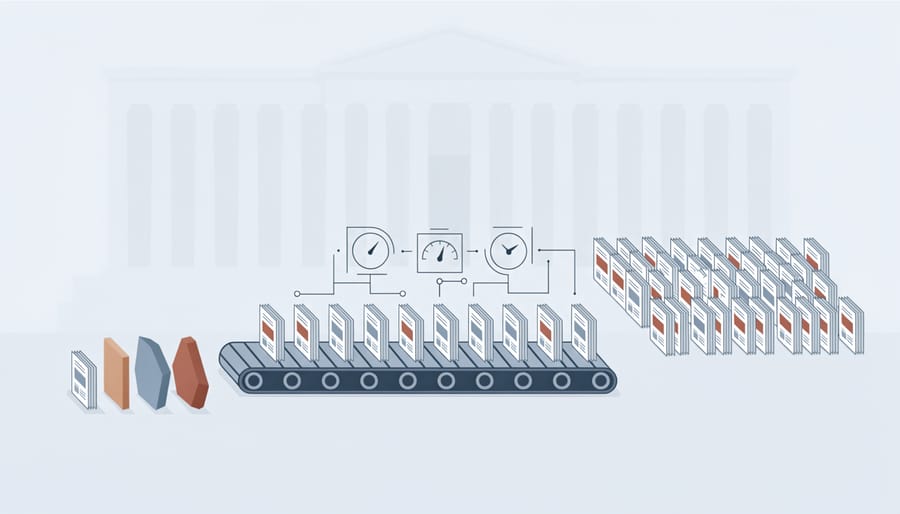
The conversation around historical educational models and their modern applications has intensified in professional learning circles. As organizations grapple with rapid technological change and shifting workforce demands, L&D leaders increasingly look to proven frameworks that have stood the test of time. Charlemagne’s systematic approach to knowledge dissemination represents exactly such a framework, one that solved problems of scale, standardization, and quality that remain strikingly relevant in 2026.
This renewed interest manifests in academic and professional venues worldwide. The 17th International Conference on Education & Workforce Development 2026 at McGill University on December 18 exemplifies this dialogue, bringing together educators, researchers, and workforce development professionals to explore innovations that bridge historical wisdom with contemporary practice. Such gatherings reflect a growing recognition that the most effective learning solutions often adapt principles established centuries ago rather than reinventing them wholesale.
The parallels between Charlemagne’s challenges and modern corporate learning extend beyond mere metaphor. His empire faced the same core dilemma today’s distributed organizations confront: how to ensure consistent knowledge transfer across geographically dispersed populations with varying baseline competencies. The remote learning techniques that enable global teams to develop skills mirror, in function if not in form, the scriptoria and traveling scholars Charlemagne deployed to spread standardized education across medieval Europe.
What makes this historical perspective valuable is not nostalgia but pattern recognition. Charlemagne’s palace schools created centralized excellence hubs while maintaining distributed delivery, a model corporate universities and learning centers of excellence replicate today. His insistence on measurable literacy standards anticipated modern learning analytics. His infrastructure investments in physical learning spaces find their counterpart in LMS platforms and digital learning ecosystems. By studying what worked twelve centuries ago, L&D professionals gain perspective on what constitutes truly fundamental versus merely fashionable in learning strategy.
Applying the Charlemagne Model: A Framework for L&D Leaders
Diagnostic Questions for Your Learning Ecosystem
To determine whether your learning programs reflect Charlemagne’s systematic rigor, or merely patch together disconnected initiatives, work through these diagnostic questions with your team:
On standardization and consistency: Do all learners encounter the same core competencies regardless of department or location, or does critical knowledge vary wildly by manager? Can you articulate your organization’s equivalent of Charlemagne’s trivium, the three to five non-negotiable skills every employee must master?
On infrastructure commitment: What percentage of your L&D budget goes to sustainable systems (platforms, content libraries, expert networks) versus one-off events? Would a new hire joining six months from now access the same quality of learning resources as someone who started yesterday?
On expert involvement: Are your training materials developed by recognized subject matter experts, or do they recycle generic content? When was the last time a senior leader personally taught a session, mirroring Charlemagne’s scholar recruitment model?
On narrative integration: Do your programs explain the why behind skills and connect learning to real outcomes, or do they simply list procedures? Research shows how stories fix it when pure instruction fails to stick.
On accountability mechanisms: Can you demonstrate what changed in employee performance after completing training, or do you measure only completion rates? Charlemagne required monasteries to prove literacy gains, what’s your equivalent?
If these questions reveal gaps, you’ve identified where medieval wisdom still outpaces modern practice.
Building Your Modern ‘Palace School’

Start by identifying your organization’s most critical knowledge domains, the capabilities that directly drive business performance. Charlemagne concentrated his palace schools on essential competencies: Latin literacy for clerical work, administrative skills for governance, theological knowledge for religious authority. Your modern equivalent isn’t a physical location but a curated ecosystem of expertise.
Create a central learning hub, whether a sophisticated LMS, a dedicated learning portal, or a knowledge management system, that serves as your authoritative source for core skills development. This hub should house your standardized curricula, assessment frameworks, and certification pathways, much as Charlemagne’s palace schools established the empire’s educational standards. Stock it with your best content, taught by your most knowledgeable practitioners.
Then build distributed delivery mechanisms that extend this excellence throughout your organization. Deploy subject matter experts as learning ambassadors in each business unit. Establish communities of practice that replicate knowledge transfer across geographies. Use technology to scale personalized learning paths while maintaining quality control over content and outcomes.
For new employee onboarding your palace school model creates immediate impact, new hires access the same foundational curriculum regardless of location or department, ensuring consistency while allowing teams to customize application examples for local context.
Invest in your learning infrastructure as Charlemagne invested in scriptoria. Allocate budget not just for content creation but for maintaining, updating, and governing your knowledge ecosystem. Designate learning stewards responsible for content accuracy and relevance. Establish review cycles that keep materials current.
The palace school wasn’t about centralizing all learning in one place, it was about centralizing excellence so it could radiate outward systematically. Your modern version achieves the same: centralized standards, distributed impact.
Charlemagne’s educational reforms were not theoretical exercises in empire-building philosophy. They were practical, measurable interventions that transformed how an entire civilization transferred knowledge, preserved expertise, and built competency across generations. The palace schools, the standardized curriculum, the recruitment of scholars, the establishment of scriptoria, these were strategic investments in learning infrastructure that produced tangible returns for centuries.
The parallels to corporate learning in 2026 are striking not because history repeats itself, but because the fundamental challenges of systematic knowledge transfer remain constant. Organizations today grapple with skills gaps, inconsistent training quality, measurement challenges, and the need to scale learning without sacrificing effectiveness. Charlemagne faced these exact problems twelve hundred years ago and solved them through principles that still work: standardization with flexibility, infrastructure investment, expert-led transfer, clearly defined competencies, and accountability mechanisms.
The most successful eLearning programs today succeed for the same reasons Charlemagne’s reforms succeeded. They establish clear standards while allowing local adaptation. They invest in robust platforms and quality content. They leverage subject matter experts rather than relying on generic templates. They define what success looks like and measure against it.
L&D professionals who understand this historical foundation gain perspective that purely contemporary approaches miss. Charlemagne did not inherit an educational system; he built one from scratch across a massive, diverse empire. That requires vision, commitment, and systematic thinking, the same qualities modern learning leaders need when transforming organizational capability.
Think as boldly about your learning ecosystem as Charlemagne thought about empire-wide education. The blueprint works because the underlying principles of effective knowledge transfer are timeless.