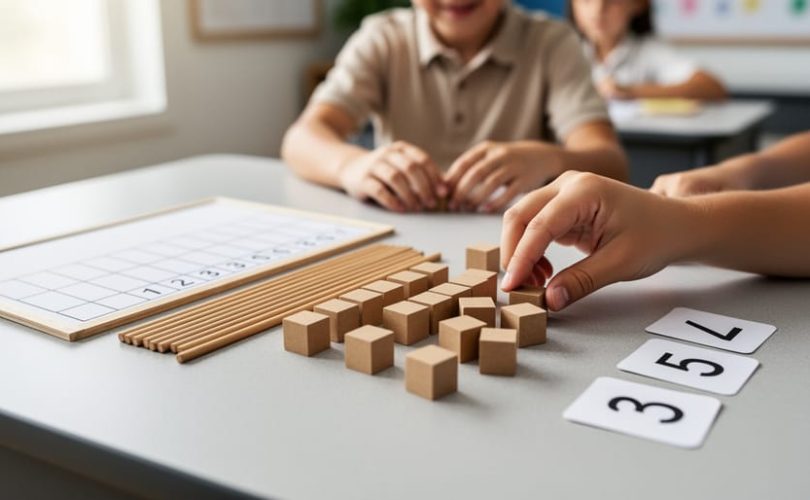
Teaching place value successfully requires moving students through a deliberate concrete-representational-abstract progression, typically beginning with base-ten blocks and place value charts before transitioning to symbolic notation. This foundational mathematics concept, central to provincial Year 4 curriculum standards and beyond, determines whether students will grasp regrouping, decimal operations, and number sense or struggle with arithmetic throughout their schooling.
The challenge facing K-12 educators and homeschoolers isn’t identifying that place value matters. It’s designing instruction that builds genuine understanding rather than rote memorization of column labels. When students can’t explain why the 5 in 523 represents fifty tens, they’re performing procedural steps without conceptual grounding. That gap compounds with every new mathematical skill.
The most effective teaching sequences apply principles familiar to learning designers in any field: start with what learners can touch and manipulate, bridge to visual representations that mirror those concrete experiences, and only then introduce abstract symbols. In place value instruction, this means progressing from bundling actual objects into groups of ten, to drawing those groups on place value charts, to writing numerals that represent the quantities. This isn’t simply good pedagogy for children. It mirrors how the brain builds schema, layering new information onto sensory and spatial foundations before moving to purely symbolic processing.
The step-by-step approach that follows integrates hands-on materials, targeted assessment checkpoints, and expansion strategies that scale from two-digit numbers through millions, giving you a complete instructional framework aligned with 2026 curriculum expectations.
Essential Tools and Materials for Place Value Instruction
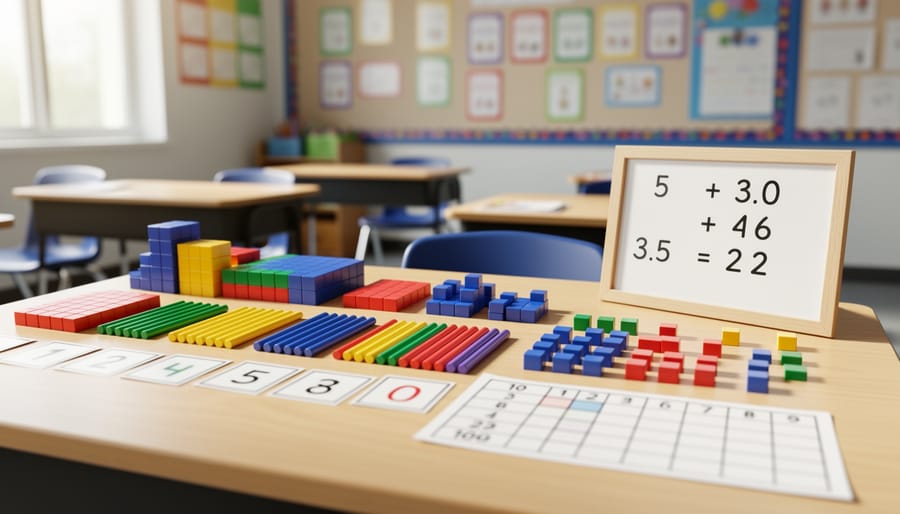
The right materials transform abstract numerical concepts into tangible learning experiences. While place value might seem purely mathematical, its mastery depends on strategic resource selection that addresses how students actually form and retain mathematical understanding.
Start with these core teaching materials:
- Base-ten blocks provide concrete representation, allowing students to physically group ones into tens and tens into hundreds
- Place value charts organize digits visually by position, creating a bridge between manipulatives and written notation
- Number lines establish sequential understanding, showing how values increase as we move between place positions
- Place value posters serve as constant visual reference points, reinforcing positional language and grouping patterns throughout lessons
These tools work because they engage multiple pathways for processing numerical information. When a student manipulates ten individual cubes and exchanges them for a single tens rod, they’re experiencing the grouping principle through touch, sight, and physical action. This multisensory engagement aligns with neuroplasticity principles about how repeated, varied exposure strengthens neural connections and builds lasting mathematical schemas.
The materials also accommodate different learning preferences. Some students grasp place value quickly through visual charts, while others need the physical feedback of moving blocks. Others benefit from the spatial layout of number lines. Providing all three modalities doesn’t dilute instruction; it ensures every learner finds an entry point that makes sense to them, then builds connections between representations.
Quality matters less than variety and availability. Commercial base-ten sets work well, but bundled craft sticks or grouped counters serve the same function. The goal is consistent access to materials that make the invisible concept of positional value visible and manipulable, allowing students to test their thinking before committing to symbolic notation.
Common Pitfalls to Avoid When Teaching Place Value
Even experienced educators sometimes fall into traps that undermine place value instruction. These missteps create conceptual gaps that surface weeks or months later when students struggle with multi-digit operations, decimals, or algebraic thinking.
The most damaging mistake is rushing students to written numerals before they’ve truly grasped what those symbols represent. When teachers skip directly to worksheets without adequate time with manipulatives, students memorize procedures without understanding. They might correctly write “3” in the tens place but have no mental image of three groups of ten objects. This hollow knowledge crumbles under pressure.
Another common pitfall is relying exclusively on one type of manipulative. Base-ten blocks work brilliantly for some learners, but others need counters, bundles of straws, or place value disks to solidify the concept. The brain builds stronger neural pathways when encountering the same principle through multiple sensory channels. Varied materials also prevent students from thinking place value only works with specific objects.
Teachers often underestimate the language stage between concrete and abstract. Students need extensive practice verbalizing what they’re doing with manipulatives before representing it on paper. Phrases like “three in the tens place means three groups of ten” should become automatic speech before introducing formal notation.
Finally, failing to connect place value to real-world contexts makes the concept feel arbitrary. Money, measurement, and population data provide meaningful applications that answer the implicit question every student asks: why does this matter? Without these connections, place value remains a school-only skill rather than a foundational thinking tool.
Step-by-Step Process for Teaching Place Value
Step 1: Use Manipulatives to Build Concrete Understanding
Start with base-ten blocks because they transform abstract place value rules into something students can hold, sort, and physically manipulate. Hand each student a collection of unit cubes, ten-rods, and hundred-flats. Ask them to build the number 24 using only unit cubes first. Most will count out twenty-four individual cubes. Then pose the question: “Can you show me this same number using fewer pieces?”
Guide them to trade ten unit cubes for one ten-rod. This physical exchange makes the grouping principle visible and memorable. Students see that ten ones become one ten, not through memorization but through direct experience. Repeat the process, building numbers like 35 or 47, each time encouraging trades when ten units accumulate.
Ask targeted questions as they work: “How many tens do you have? How many ones are left over? What number have you built?” These prompts connect the concrete action to mathematical language. The scaffolding meaning here lies in making each grouping decision deliberate rather than automatic.
Progress to building two-digit numbers directly from mixed materials: “Build 53 using the fewest blocks possible.” Students must now plan their construction, choosing five ten-rods and three unit cubes. This reverses the process, moving from numeral to concrete representation, deepening conceptual understanding through hands-on construction.
Step 2: Connect Physical Models to Mathematical Language
Once students can physically group and manipulate base-ten blocks, they need to attach precise mathematical language to those actions. This representational stage bridges hands-on experience and written symbols, transforming physical understanding into communicable concepts.
Guide students to narrate what they’re doing as they work: “I have three tens and four ones” rather than just “thirty-four.” Introduce terms like ‘ones place,’ ‘tens place,’ ‘digit,’ and ‘value’ during manipulation activities, modelling the language first. When a student trades ten individual blocks for a tens rod, verbalize it together: “We’re regrouping ten ones into one ten.”
Use explicit place-value vocabulary consistently. Ask questions that require students to articulate their thinking: “What does the 5 represent in this number?” or “How would you describe this quantity using tens and ones?” Write their verbal descriptions on the board alongside the physical model to create a visible connection.
This language stage shouldn’t be rushed. Students who can explain their reasoning demonstrate deeper understanding than those who simply follow procedures. The goal is fluency in describing numerical structure before moving to abstract written forms.

Step 3: Introduce Symbolic Representation with Place Value Charts
Once students can confidently manipulate base-ten blocks to build numbers, introduce place value charts to bridge the gap between physical materials and written numerals. A chart with clearly labeled columns, ones, tens, hundreds, gives learners a structured space to record what they’ve constructed. Have students build a number with blocks, then transfer that same quantity onto the chart by writing the corresponding digit in each column. For example, after assembling three tens rods and five ones cubes, they write ‘3’ in the tens column and ‘5’ in the ones column, creating the numeral 35.
This visual scaffold reinforces that position determines value. Students see that the digit 3 means thirty only because it sits in the tens place, not because the number itself changed. The chart makes abstract place value notation tangible and systematic. As students move between manipulatives and charts repeatedly, they internalize how digits represent grouped quantities rather than isolated symbols. This stage embeds the language and structure needed before students tackle purely symbolic notation, preventing the common mistake of treating multi-digit numbers as separate single digits rather than unified values.
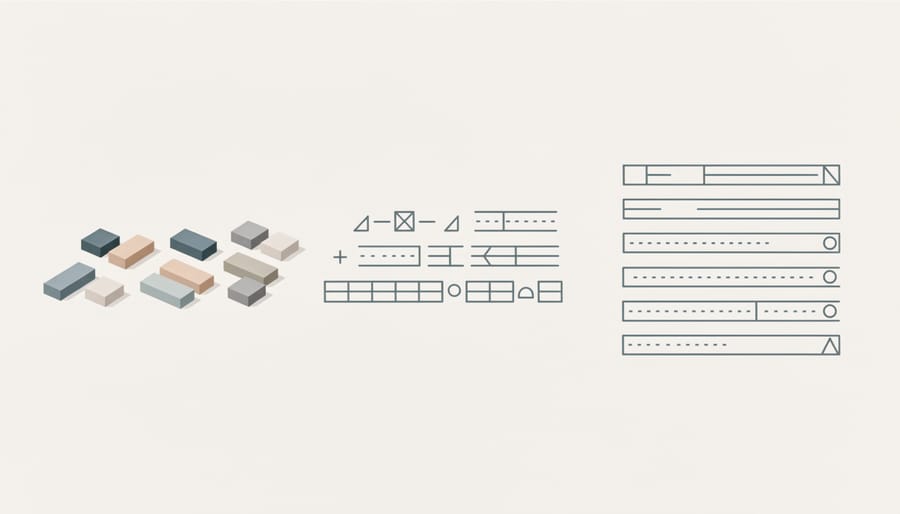
Step 4: Determine the Place Value of Individual Digits
Once students can build numbers with manipulatives and connect them to place value charts, they’re ready for targeted digit recognition practice. This step isolates a crucial skill: identifying what a single digit represents based on its position, not its face value.
Present students with a complete number, say, 347, and ask specific questions: “What is the value of the 4 in this number?” Many students will initially answer “four” instead of “forty” or “four tens.” This reveals they’re reading the digit itself rather than understanding its positional value. Correct this by returning briefly to base-ten blocks, showing that the 4 sits in the tens place and therefore represents four groups of ten.
Create focused activities where students circle a specific digit, then write or show its actual value. Use place value charts alongside these exercises so students can visually confirm position determines value. Ask comparison questions: “Where does the digit 3 have greater value, in 234 or 432?” This reinforces that identical digits carry different weights depending on placement.
Vary your question types. Sometimes ask for the digit in a specific place (“What digit is in the hundreds place?”), other times ask for a digit’s value (“What is the value of the 2?”). This dual approach ensures students can move fluidly between position and value, essential for later work with decimals and larger numbers.
Step 5: Deepen Understanding Through Varied Hands-On Activities
Once students can build, name, and symbolize place value with charts and manipulatives, varied practice activities prevent plateau and build flexible thinking. Rotating through different activity types keeps engagement high and reveals whether students truly grasp the concept or have simply memorized one procedure.
- Regrouping challenges where students exchange ten ones for one ten or ten tens for one hundred using base-ten blocks, then record the transformation on their place value chart.
- Multi-representation matching games pairing physical models, expanded form (300 + 40 + 7), written numerals (347), and word names, forcing students to translate fluently between formats.
- Comparison activities using inequality symbols where students build two numbers with blocks, compare their values, and justify which is greater by analyzing digits in each place.
- Application scenarios embedding place value in real contexts, counting classroom supplies, measuring distances on number lines, or solving word problems about collections and quantities.
Teachers can use stories to engage students during application tasks, framing regrouping as a shopkeeper making change or comparison as deciding which team scored more points. These narrative hooks transform abstract drills into meaningful problem-solving. Design thinking reminds us that learners need multiple entry points and contexts; what clicks for one student through blocks might solidify for another through a game or story scenario, so cycling through varied activities ensures conceptual depth rather than fragile, context-bound recall.
Expanding Place Value Knowledge to Larger Numbers
Once students confidently work with numbers in the hundreds, the same concrete-representational-abstract sequence scales naturally to thousands, ten thousands, and beyond. The key is maintaining the hands-on foundation rather than jumping straight to abstract notation with larger values.
Start by extending your base-ten materials. If using blocks, introduce the thousand cube; if working with place value disks or bundled straws, create thousands bundles. Students physically see that ten hundreds make one thousand, reinforcing the grouping pattern they’ve already internalized. This tangible connection prevents the common misconception that place value rules change when numbers get bigger.
Continue using place value charts, now expanded to include thousands, ten thousands, and hundred thousands columns. Students build numbers with manipulatives, record them on charts, then practice reading and writing the numerals. Year 4 curriculum expectations typically include reading and writing numbers to at least 10,000, making this extension developmentally appropriate once three-digit mastery is solid.
The same progression applies: concrete manipulation first, then language development (teaching students to say “four thousand, two hundred thirty-six” while pointing to each digit’s position), finally moving to pure symbolic work. Don’t skip stages just because students are older or the numbers are larger.
Provincial curriculum standards provide guidance on scope and sequence, but watch your students’ understanding rather than rushing to meet benchmarks. If they struggle with five-digit numbers, return to thousands with additional hands-on practice. Solid conceptual understanding at each level prevents the confusion that compounds when students memorize procedures without grasping underlying patterns.
Verification: How to Assess Place Value Understanding
True mastery goes beyond reciting digit positions. Students who genuinely understand place value can represent the same number using different models without prompting, explain why digits have different values in their own words, and apply this reasoning to solve problems. Watch for these competencies during instruction rather than relying solely on worksheets.
Effective formative assessment happens through diagnostic questions that probe understanding. Ask students to show 347 with base-ten blocks, then challenge them to represent the same number on a place value chart and through expanded notation. Students with conceptual grasp move fluidly between representations. Those struggling reveal gaps when transitioning from one model to another. Questions like “What does the 4 represent in 347?” separate rote memorization from genuine comprehension.
Performance tasks aligned with teaching and learning research provide deeper insight. Present a comparison problem: “Which is larger, 482 or 527? Explain using place value.” Students who understand compare the hundreds first, articulating why position matters more than digit size. Error analysis tasks work well too. Show 305 incorrectly written as “three hundred five” and ask students to identify and correct the mistake using place value vocabulary.
Advance to larger numbers when students consistently demonstrate understanding across contexts, not just during guided practice. If they struggle with independent application or revert to counting by ones when using manipulatives, provide targeted support at the concrete stage before moving forward. Assessment should inform your instructional pace, ensuring foundations remain solid as complexity increases.
Frequently Asked Questions About Teaching Place Value
What grade levels need place value instruction?
Place value instruction begins in kindergarten with basic grouping concepts and extends through elementary grades as students work with increasingly larger numbers. The concrete-representational-abstract progression applies across all levels, though Year 4 students typically consolidate understanding up to thousands while younger learners focus on tens and hundreds.
How long should students work with manipulatives before moving to abstract symbols?
Students need varied amounts of time at the concrete stage depending on their prior mathematical experiences and developmental readiness. Watch for consistent success with physical models and confident verbal explanations before introducing written numerals; rushing this transition creates gaps that compound later. Most students benefit from several weeks of hands-on work with base-ten blocks and place value charts before relying primarily on symbolic notation.
Which manipulatives work best for different developmental stages?
Base-ten blocks provide the clearest physical representation of place value relationships because their size differences mirror the ten-to-one ratios between positions. Younger students benefit from starting with interlocking cubes they can count and group themselves, while older learners ready for larger numbers can use place value disks or chips that emphasize position over physical size.
How do place value lessons align with provincial curriculum standards?
Provincial curricula specify place value expectations at each grade level, typically progressing from two-digit numbers in early primary grades to millions by upper elementary. Year 4 resources designed for curriculum alignment ensure lessons meet these benchmarks while maintaining instructional coherence across grades, so verify that your teaching materials explicitly reference the standards you’re accountable to.
Teachers often ask what to do when students successfully complete activities with manipulatives but freeze when asked to work with numerals alone. This pattern signals that the representational stage needs more attention. Return to place value charts where students record what they’ve built physically, creating a visual bridge between the concrete blocks and the abstract digits. Have students talk through each step as they write, verbalizing how three rods and four units becomes “34” because the 3 sits in the tens position.
Differentiation becomes essential when some students grasp place value quickly while others need extended practice. Rather than holding advanced learners back or pushing struggling students forward prematurely, provide parallel activities at different complexity levels. Quick learners can explore decomposing numbers in multiple ways or tackle comparison problems with four-digit values, while those needing more support continue building two-digit numbers with careful attention to language and grouping. The same instructional principles apply across these different entry points, making it possible to teach mixed-ability groups without sacrificing conceptual depth for any student.
Teaching place value effectively requires patience, intentionality, and trust in the learning process. The progression from concrete manipulatives through mathematical language to abstract symbols respects how learners build genuine understanding rather than surface-level memorization. When you allow students adequate time with base-ten blocks before introducing numerals, when you insist they verbalize what they’re constructing before writing it down, you’re honoring the cognitive architecture that supports lasting mathematical reasoning.
This foundational concept deserves more than procedural compliance. It warrants careful observation of what students actually understand versus what they can temporarily reproduce. Use varied materials, place value charts, number lines, hands-on activities, because different representations illuminate different aspects of the same truth. Assess for transfer and flexibility, not just correct answers on worksheets.
The principles that make place value instruction succeed, scaffolded progression, multisensory engagement, language development preceding abstraction, reflect broader insights about how humans learn complex concepts. Whether teaching Year 4 students or designing any structured learning experience, the pattern holds: concrete before abstract, varied practice before mastery, understanding before advancement.